7approx.
* Prices are subject to revision. Delivery fees may vary by location.
Description
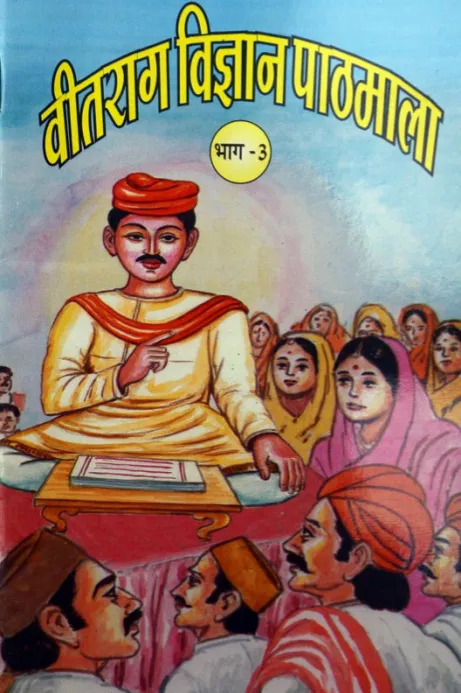
Vitaraag Vigyan Pathmala Part 3 (वीतराग विज्ञान पाठमाला भाग-3)
Published by Pandit Todarmal Smarak Trust (PTST), Jaipur, this third volume in the series deepens the student's understanding of Jain ethics, geography, and the core path to liberation.
1. Chapter List & Summary
The book contains 11 lessons that combine character building with metaphysical concepts:
- Atma-Bhavana: A poetic reflection on the nature of the soul and self-realization.
- Dev-Shastra-Guru: A deeper analysis of the three "True Refuges" and how to identify them logically.
- Saat Tattva (The Seven Realities): A detailed look at the spiritual process (Asrava, Bandha, Samvara, Nirjara, Moksha).
- Teen Lok (The Three Worlds): An introduction to Jain geography—the Upper World (Heaven), Middle World (Humans/Animals), and Lower World (Hell).
- Char Gati (Four Destinies): Explaining the cycle of rebirth in the four realms and the suffering associated with each.
- Anuvrata (Minor Vows): Practical guidelines for householders to practice Ahimsa, Satya, Achaurya, Brahmacharya, and Aparigraha.
- Baras Bhavana (12 Reflections): Meditative thoughts (like Anitya, Asharana) designed to cultivate detachment (Vairagya).
- Dharma Ke Dash-Lakshan: The ten virtues of religion (Supreme Forgiveness, Humility, etc.) as celebrated during Paryushan.
- Mokshamarg (Path to Liberation): Defining the unity of Right Faith, Knowledge, and Conduct (Ratnatraya).
- Ahimsa (Non-Violence): A scientific and spiritual exploration of Non-violence beyond just physical acts.
- Tirthankara Parshvanath: The life story and teachings of the 23rd Tirthankara, focusing on equanimity during affliction (Upsarg).
2. Key Philosophical Concepts
A. The Seven Tattvas (Spiritual Mechanics)
- Jiva & Ajiva: The actors (Soul and Matter).
- Asrava & Bandha: The problem (Influx and Bondage of Karma).
- Samvara & Nirjara: The process of the solution (Stopping and Shedding Karma).
- Moksha: The goal (Total Freedom).
B. The Ten Virtues (Dash-Lakshan)
- Rather than rituals, religion is defined as the nature of the soul (Vatthu Sahavo Dhammo).
- Virtues like Kshama (Forgiveness) and Mardava (Humility) are presented as tools to reduce the ego and passions.
C. The 12 Reflections (Anupreksha)
- These are used as mental exercises to detach the mind from worldly anxieties.
- For example, Anitya Bhavana teaches that since all external things are temporary, one should focus on the eternal soul.
3. Publication Details
- Level: Intermediate.
- Objective: To prepare the student for the Tattvajnana Pathmala series.
- Editors: Dr. Hukamchand Bharill & Pt. Ratanchand Bharill.
- Availability: PTST Jaipur | JainEbooks.org.
4. Educational Context
- Previous Step: Vitaraag Vigyan Pathmala Part 2.
- Next Step: Tattvajnana Pathmala Part 1 (focus on Nayas and Dravya-Guna-Paryaya).
Language
HindiISBN
-Formats
PaperbackTopics
Tattvagyan