8approx.
* Prices are subject to revision. Delivery fees may vary by location.
Description
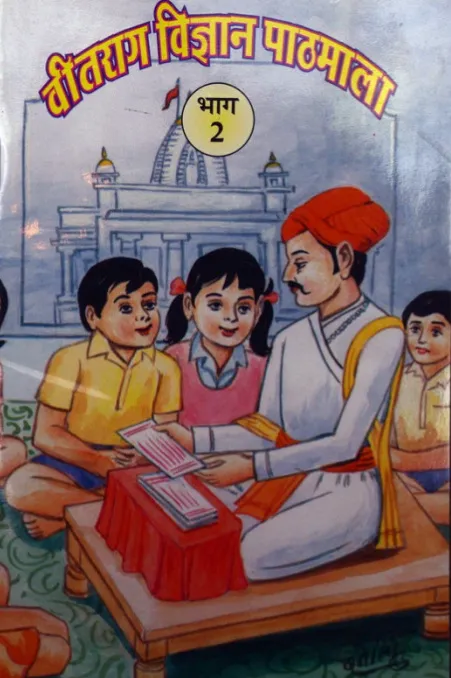
Vitaraag Vigyan Pathmala Part 2 (वीतराग विज्ञान पाठमाला भाग-2)
Published by Pandit Todarmal Smarak Trust (PTST), Jaipur, this second volume serves as an intermediate guide, introducing core concepts of Jain metaphysics and the daily duties of a seeker.
1. Chapter List & Summary
The book consists of 11 lessons designed to build a strong foundation in Jain philosophy and history:
- Jina-Stuti: A devotional opening focusing on the qualities of the Vitaragi (detached) Jina.
- Chhah Dravya (The Six Substances): An introduction to the constituents of the universe—Jiva, Pudgala, Dharma, Adharma, Akasha, and Kaala.
- Pancha-Paramesthi: A detailed look at the roles and qualities of the five supreme spiritual authorities.
- Asht-Moolguna (Eight Primary Virtues): The fundamental requirements for a Jain lifestyle, including the renunciation of meat, alcohol, and honey.
- Chhah Avashyak (Six Daily Duties): Practical daily routines for a householder—Dev-Puja, Gurupasti, Swadhyay, Sanyam, Tap, and Dana.
- Bhaksya-Abhaksya (Edibles vs. Non-edibles): A logical and biological explanation of why certain foods (like root vegetables) are avoided in Jainism.
- Jiva-Vichar: Categorizing living beings based on their senses (one-sensed to five-sensed).
- Ratnatraya (The Three Jewels): Defining Right Faith (Samyak-Darshan), Right Knowledge (Samyak-Gyana), and Right Conduct (Samyak-Charitra).
- Tirthankara Adinath: The life story of the first Tirthankara, emphasizing his contribution to human civilization and his ultimate renunciation.
- Tirthankara Neminath: The touching story of the 22nd Tirthankara’s detachment upon hearing the cries of animals.
- Sati Mainasundari: A powerful story of faith and the efficacy of the Siddhachakra Mahayantra.
2. Key Philosophical Concepts
A. The Six Dravyas (Metaphysics)
- Jiva: The conscious soul.
- Pudgala: Matter (possessing touch, taste, smell, and color).
- Dharma & Adharma: The auxiliary causes of motion and rest.
- Akasha: Space, which provides room to all substances.
- Kaala: Time, which assists in the change/function of substances.
B. The Six Daily Duties (Shravakachara)
- The book emphasizes that a spiritual life is not just about theory but also about daily practice.
- It introduces the concept that Swadhyay (self-study) is the highest form of austerity (Tap) for a householder.
C. Rational Conduct (Sanyam)
- The lessons on Abhaksya Tyag (giving up non-edibles) are presented logically, connecting the protection of tiny organisms (Jiva-Daya) with the purity of one's own thoughts.
3. Publication Details
- Level: Intermediate (Step 2 of the 8-part curriculum).
- Editors: Dr. Hukamchand Bharill & Pt. Ratanchand Bharill.
- Publisher: Pandit Todarmal Smarak Trust, Jaipur.
- Digital Access: JainEbooks.org | AtmaDharma.com.
4. Educational Context
- Previous Step: Vitaraag Vigyan Pathmala Part 1.
- Next Step: Vitaraag Vigyan Pathmala Part 3 (focus on the 7 Tattvas and 12 Reflections).
Language
HindiISBN
-Formats
PaperbackTopics
Tattvagyan