5approx.
* Prices are subject to revision. Delivery fees may vary by location.
Description
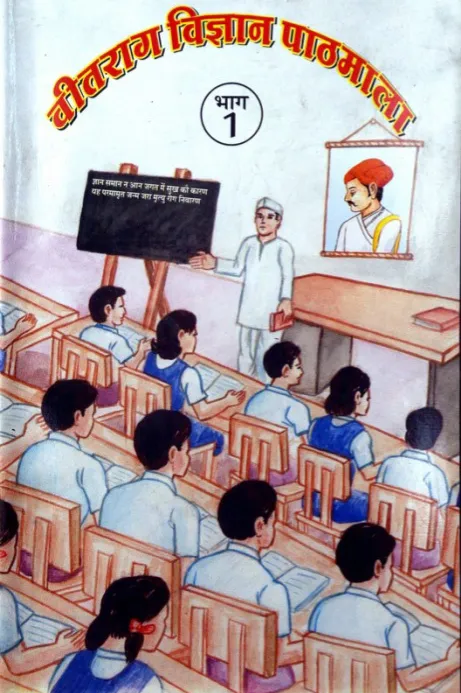
Vitaraag Vigyan Pathmala Part 1 (वीतराग विज्ञान पाठमाला भाग-1)
Published by Pandit Todarmal Smarak Trust (PTST), Jaipur, this volume marks the beginning of formal philosophical study. It introduces the fundamental vocabulary and concepts of Jainism in a structured format.
1. Chapter List & Summary
The book consists of 10 primary lessons that lay the groundwork for spiritual logic:
- Namokar Mahamantra: A deep explanation of the supreme mantra, focusing on why we bow to "Qualities" rather than "Personalities."
- Dev-Shastra-Guru: Defining the true God (Vitaragi/Omniscient), the true Scriptures (Apta-Vani), and the true Teachers (Possessionless Monks).
- Jiva-Ajiva: The basic distinction between the Conscious (Soul) and the Non-conscious (Body/Matter).
- Char Gati (The Four Destinies): An overview of the realms of existence—Deva, Manushya, Tiryancha, and Naraka.
- Paap (The Five Sins): A breakdown of Himsa (Violence), Satya (Lying), Achaurya (Stealing), Kushila (Unchastity), and Parigraha (Possession).
- Ahimsa (Non-Violence): The core tenet of Jainism, explained as the absence of passionate thoughts.
- Sat-Tattva (The Seven Realities): A brief introduction to Jiva, Ajiva, Asrava, Bandha, Samvara, Nirjara, and Moksha.
- Bhaksya-Abhaksya: The logic behind avoiding certain foods to maintain spiritual and physical purity.
- Tirthankara Mahaveera: A short biography of the 24th Tirthankara, focusing on his message of 'Live and Let Live.'
- Kahani (Moral Story): Usually featuring a story like 'The Four Friends' or a similar parable to illustrate the fruits of good and bad karmas.
2. Key Philosophical Concepts
A. The Definition of a 'Jiva' (Soul)
- The book teaches that the soul is not a vague concept but a substance whose identity is Knowledge (Gyana) and Perception (Darshan).
- It emphasizes that "I am the Soul" and "The body is just my house."
B. Vitaragata (Detachment)
- It introduces the concept that the highest state of being is not 'Power' or 'Creation', but total Detachment from likes and dislikes.
- This is why Jain Tirthankaras are worshipped—not because they grant boons, but because they have conquered their internal enemies.
C. The Science of Sin (Paap)
- It explains that 'Sin' is not just a physical act but a state of the soul that leads to future suffering.
- Special focus is given to Parigraha (Attachment to possessions) as a root cause of other sins.
3. Publication Details
- Level: Beginner-Intermediate (Step 1 of the formal curriculum).
- Language: Simple Hindi with Prakrit/Sanskrit verses.
- Editors: Dr. Hukamchand Bharill & Pt. Ratanchand Bharill.
- Availability: PTST Jaipur | AtmaDharma.com.
4. Educational Context
- Previous Step: Balbodh Pathmala Part 3.
- Next Step: Vitaraag Vigyan Pathmala Part 2 (focus on 6 Dravyas and Daily Duties).
Language
HindiISBN
-Formats
PaperbackTopics
Tattvagyan