25approx.
* Prices are subject to revision. Delivery fees may vary by location.
Description
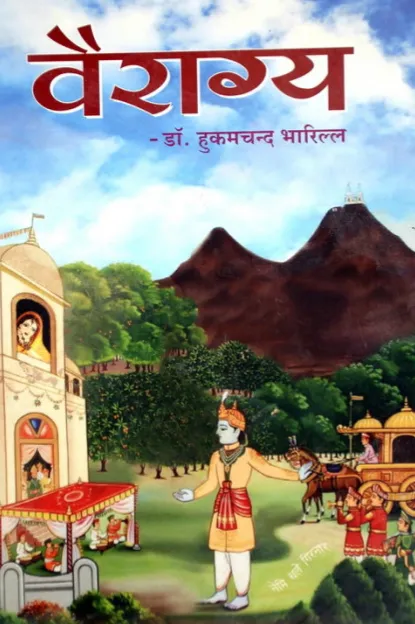
वैराग्य महाकाव्य (Vairagya Mahakavya)
Author: Dr. Hukamchand Bharill (डॉ. हुकुमचंद भारिल्ल)
Publisher: Pandit Todarmal Smarak Trust (PTST), Jaipur
1. Introduction to the Book
'Vairagya Mahakavya' is a magnificent poetic work that portrays the transition from Anuraga (attachment) to Vairagya (detachment). Dr. Bharill uses the life stories of the 24 Tirthankaras and other great personages (Shalaka Purush) to illustrate how witnessing simple events can trigger a deep spiritual awakening.
2. Key Highlights and Themes
- The Call of the Soul: The epic focuses on the "turning points" in the lives of Great Men—events like seeing a grey hair, a passing cloud, or the falling of a leaf—that led them to realize the transience of life.
- Detailed Life Sketches: While it is a "Mahakavya" (Epic Poem), it follows the historical narrative of the Jain Puranas, describing the births, renunciations, and ultimate liberations of the Tirthankaras.
- The Philosophy of Detachment: Dr. Bharill clarifies that Vairagya is not "running away" from the world, but "understanding the true nature" of the world. It is a mental state of equanimity.
- Poetic Excellence: The book is written in beautiful Hindi verses (Chhandas) that are both rhythmic and philosophically heavy. It is often recited in spiritual gatherings.
- From Bhakti to Shakti: It starts with the devotion of the Tirthankaras and ends with the realization of the inherent power (Shakti) of the self.
3. Spiritual Essence
The central message of the epic is captured in the realization that:
"The external world is changing every moment; the only constant is the Knower-Seer (Gyayak) within. Finding peace in this constant is true Vairagya."
4. Usage and Popularity
- Recitation: Many chapters of this epic are sung as hymns during Paryushan Parva and other religious festivals.
- Meditation: The verses are used as a base for Vichara-Dhyana (Contemplative Meditation).
- Youth Inspiration: It presents renunciation not as a painful sacrifice, but as a joyful attainment of freedom.
5. References and Availability
- Language: Lucid and impactful Hindi poetry.
- Target Audience: Anyone seeking a shift from worldly stress to spiritual peace.
- Digital Link: Available on Jain eBooks and Atma Dharma.
6. Related Works
- Shalaka Purush (Purvardh & Uttarardh): For the narrative background of these stories.
- Barah Bhavana: For a focused study on the twelve reflections of detachment.
- Tirthankara Bhagwan Mahaveera: A detailed study of the 24th Tirthankara.
Language
HindiISBN
-Formats
PaperbackTopics
Vairagya