10approx.
* Prices are subject to revision. Delivery fees may vary by location.
Description
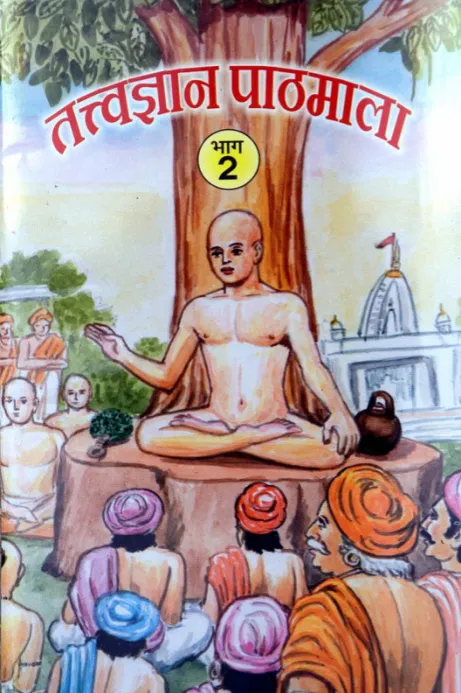
Tattvajnana Pathmala Part 2 (तत्त्वज्ञान पाठमाला भाग-2)
This text is a core component of the Vitaraag Vigyan curriculum published by Pandit Todarmal Smarak Trust (PTST), Jaipur. It serves as an advanced-intermediate guide to Jain logic and metaphysics.
1. Chapter Overview
The book is structured into 9 specific lessons focusing on the "Science of Truth" (Tattvajnana):
- Mahaveerashtak Stotra: A devotional opening focused on the virtues of Lord Mahaveera.
- Scriptural Methodology: Techniques for interpreting deep Agamic texts.
- Punya & Paapa: A logical analysis of merit and demerit.
- Upadan & Nimitta: The theory of internal vs. external causality.
- Aatmanubhuti: The process of experiencing the pure soul.
- Shatkarak: The six-fold internal factors of action.
- Gunasthana: The 14 stages of spiritual evolution.
- Tirthankara Mahaveera: Life and philosophy of the 24th Tirthankara.
- Devagam Stotra: Criteria for identifying a true omniscient teacher (Apta).
2. Key Philosophical Concepts
A. Upadan-Nimitta (Causality)
- Upadan (Substantial Cause): The inherent capacity within a substance that actually transforms into a new state. (e.g., Clay transforming into a pot).
- Nimitta (Instrumental Cause): External factors present during the transformation that do not actually become the product. (e.g., The potter or the wheel).
- Spiritual Application: The soul is its own Upadan for happiness; worldly objects are merely Nimitta.
B. Shatkarak (The Six Factors)
Jainism posits that a substance is independent because it performs all six roles of action within itself:
- Karta: The Doer (The Soul)
- Karma: The Objective (The state of Knowledge/Bliss)
- Karana: The Instrument (The Soul's own power)
- Sampradan: The Recipient (The Soul itself)
- Apadan: The Source (The eternal Soul)
- Adhikaran: The Base (The Soul's own space)
3. Reference & File Details
- Author/Editor: Dr. Hukamchand Bharill & Pt. Ratanchand Bharill.
- Format: PDF / Printed Booklet.
- Average File Size: 2.5 MB to 4.0 MB.
- Source: Pt. Todarmal Smarak Trust (PTST).
4. Suggested Study Sequence
- Balbodh Pathmala (Primary)
- Vitaraag Vigyan Pathmala (Intermediate)
- Tattvajnana Pathmala (Advanced)
Language
HindiISBN
-Formats
PaperbackTopics
Tattvagyan