5approx.
* Prices are subject to revision. Delivery fees may vary by location.
Description
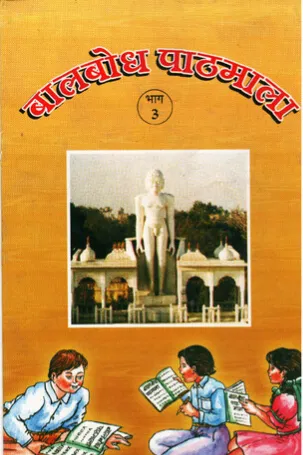
Balbodh Pathmala Part 3 (बालबोध पाठमाला भाग-3)
Published by Pandit Todarmal Smarak Trust (PTST), Jaipur, this volume completes the foundational trilogy. It transitions from basic ethics to a more structured understanding of Jain cosmology and internal spiritual mechanics.
1. Chapter List & Summary
The book consists of 10 primary lessons designed to finalize the student's basic training:
- Jina-Stuti: A devotional hymn focusing on the supreme qualities of the Jina.
- Chhah Dravya (The Six Substances): An introduction to the constituents of the universe—Jiva, Pudgala, Dharma, Adharma, Akasha, and Kaala.
- Pancha-Paramesthi: A concluding look at the five supreme beings, emphasizing their specific roles in the path to Moksha.
- Kashaya (Passions): A simplified analysis of Anger, Pride, Deceit, and Greed, and how they cause unhappiness.
- Asht-Moolguna (Eight Primary Virtues): Detailed explanation of the eight basic requirements for a Jain lifestyle (renouncing 3 'M's and 5 'Udumbar' fruits).
- Teen Lok (The Three Worlds): A visual and descriptive introduction to Jain geography—Urdhva (Upper), Madhya (Middle), and Adho (Lower) Lok.
- Jiva-Vichar: Categorizing living beings from one-sensed (Ekendriya) to five-sensed (Panchendriya) beings.
- Asht-Dravya (The Eight Offerings): Explaining the meaning and purpose of the eight items used in Jain worship (Pujan).
- Tirthankara Parshvanath: The life story of the 23rd Tirthankara, highlighting his patience and equanimity.
- Aatmaram (The Happy Soul): A concluding moral story or poem about finding joy within oneself rather than in worldly objects.
2. Key Philosophical Concepts
A. Universal Structure (Chhah Dravya)
- This is the child's first encounter with the scientific side of Jainism.
- It explains that the world was never "created" but is a self-sustaining system made of these six substances.
B. Understanding Kashaya (Emotions)
- It teaches children that Anger and Greed are internal enemies.
- The lesson provides practical examples: "Getting angry at a broken toy only hurts you, not the toy."
C. The Eight Primary Virtues (Moolguna)
- This chapter sets the stage for a disciplined Jain lifestyle.
- It connects dietary choices (like avoiding alcohol or non-vegetarian food) with the concept of Compassion (Daya) and Self-control (Sanyam).
3. Publication Details
- Level: Beginner (Final step of the Foundation series).
- Editors: Dr. Hukamchand Bharill & Pt. Ratanchand Bharill.
- Publisher: Pandit Todarmal Smarak Trust, Jaipur.
- Source: PTST Jaipur | AtmaDharma.com.
4. Educational Context
- Previous Step: Balbodh Pathmala Part 2.
- Next Step: Vitaraag Vigyan Pathmala Part 1 (Formal Metaphysics).
Language
HindiISBN
-Formats
PaperbackTopics
Tattvagyan